
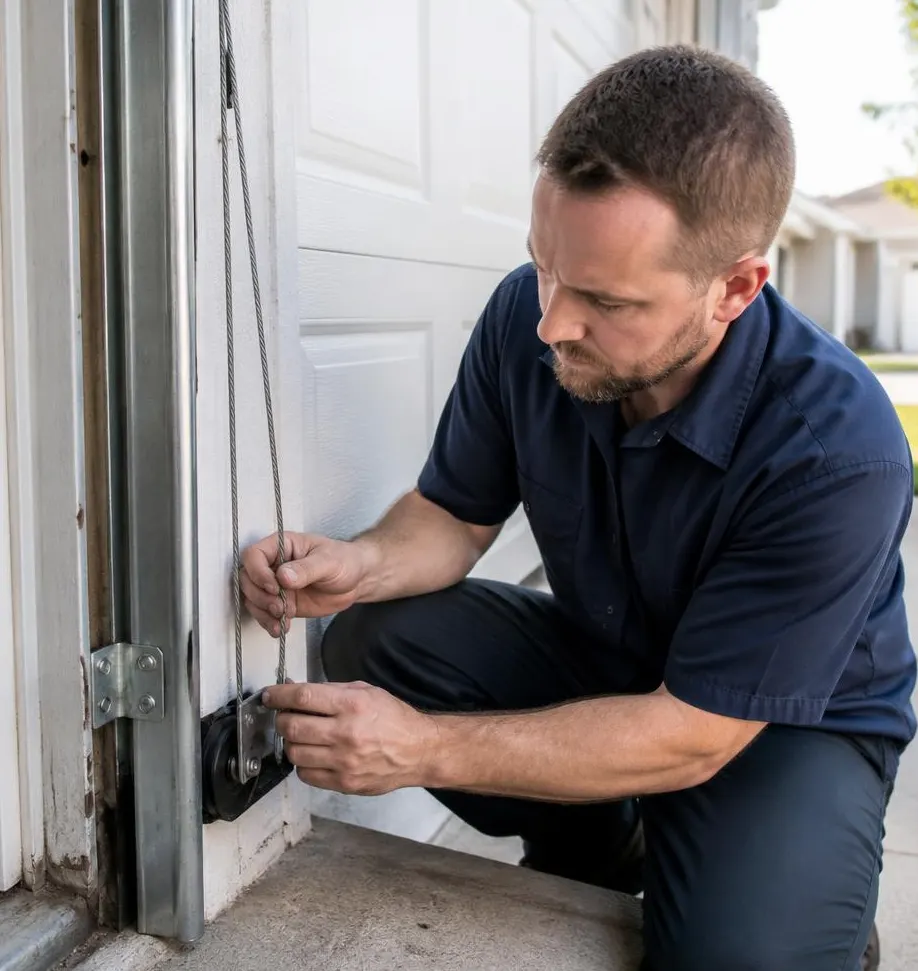
Rule of thumb: if the opener light comes on but the door won't move, the problem is almost always power or signal, not the motor itself. The exceptions are an opener that stays completely dark (that points straight to power) and a door that's physically jammed on its track, which no amount of remote-button-pressing will fix.
What You're Actually Seeing
Before troubleshooting, it helps to note exactly which symptom you have, since each one points a different direction:
- Complete silence — no light, no hum, no click — when you press either the remote or the wall button
- The opener light turns on, but nothing else happens
- You hear a hum or click, but the door doesn't budge
- The wall button works but the remote doesn't (or vice versa)
- The opener works sometimes, then stops responding for no clear reason
- The opener light blinks a set number of times and then stops
Hold onto that detail — it's the first thing a technician will ask.
Checking Causes in the Order a Technician Would
1. Power at the Unit
This is the first and most common culprit, especially after a storm or a brief outage, which isn't unusual here once winter rain season starts. Garage door openers are often plugged into an outlet on the ceiling that shares a circuit with a GFCI outlet elsewhere in the garage. If that GFCI trips — from moisture, a power surge, or just age — the opener goes dead even though everything looks fine. Check the outlet itself with another device, then check the breaker panel. If the unit lost power during an outage and never got re-synced, some models need the wall console reset before they respond again.
2. Remote Battery and Range
If the light comes on but only the remote fails, start with the obvious: swap the battery. Dust and dry-season grime (common here with wildfire smoke and dry air) can also build up on the contacts inside the remote, so a quick wipe with a dry cloth sometimes restores the connection. If a fresh battery doesn't help, try standing closer to the door — a failing remote often has a shrinking range before it quits completely.
3. Antenna and Signal Interference
The opener's antenna is a thin wire hanging from the motor unit, and it's more fragile than it looks. If it's been bumped, tucked up out of the way, or is sitting too close to metal ductwork or insulation, the unit may not pick up the remote's signal at all even though it works perfectly from the wall button a few feet away. New LED garage lights or nearby electronics can also interfere with the frequency. The fix here is usually just repositioning the antenna so it hangs freely, away from metal surfaces.
4. Wall Button Wiring
If the remote works but the wall button doesn't, the wiring between the button and the motor unit is the next stop. These wires run along the garage wall or ceiling and are thin, low-voltage lines that are easy to pinch, nick, or let corrode where moisture gets in — a real issue in garages that see winter rain tracked in or a door left cracked during dusty, smoky stretches of summer. A loose wire nut or a hairline break in the insulation can cause intermittent response that looks random but is actually a simple wiring fault. Reconnecting or replacing a few feet of this wire is a quick fix once it's found.
5. Safety Sensor Alignment
Two small sensors sit a few inches off the ground on either side of the door track. If they're knocked out of alignment or one lens is dirty — dust and wildfire ash settle on these more than people expect — the opener may refuse to respond to either the remote or the wall button, or it will reverse the door immediately after starting to close. Most units will blink the garage light a specific number of times to signal this, which is why that detail from the symptom list matters. Wiping the lenses and nudging the brackets until both indicator lights turn solid often resolves it without any new parts.
6. Logic Board or Circuit Failure
If power is good, the remote and wall button both check out, the antenna is clear, and the sensors are aligned, the issue is likely the circuit board inside the motor unit itself. Age takes a toll here, and so do power surges during storm season. In rural garages, it's also worth checking for rodent activity — foothill homes sometimes get mice or squirrels nesting near the warm motor housing during cooler months, and chewed wiring looks a lot like electrical failure until someone opens the unit. A damaged board typically means replacing the logic board or, if the unit is older, replacing the opener entirely rather than chasing parts for a model that's past its support life.
When to Call Pioneer Door & Opener
If you've swapped the batteries, checked the outlet, and the opener still won't respond to either the remote or the wall button, it's time to bring in a technician rather than keep guessing. This is especially true if the door reverses unexpectedly, the motor hums without moving the door, or you suspect rodent damage inside the unit — these point to electrical or mechanical issues that are risky to troubleshoot with a door under spring tension. Our Opener Repair & Installation service covers exactly this: diagnosing dead circuit boards, replacing damaged wiring, and realigning or swapping sensors. If the unit turns out to be beyond repair, we can also handle a full opener replacement as part of a broader Maintenance & Tune-Up visit, which catches wear on the rollers, track, and springs before they turn into a bigger problem.
If your garage door opener in Pioneer, CA or anywhere along Highway 88 has stopped listening to the remote or wall button, give Pioneer Door & Opener a call — we'll track down the cause and get your door responding reliably again.